

Researchers from the Center for Ecological Research and Forestry Applications (CREAF), the International Centre for Numerical Methods in Engineering (CIMNE) and other Catalan and Spanish institutions have developed a novel methodology to identify threats to biodiversity.
In a study released in the journal Heliyon (Cell Publishing), the multidisciplinary team, including former head of CIMNE’s Natura, Dr. Pedro Arnau, overlapped drivers of change maps with distribution maps of threatened species to assess the impact of high human frequencyin highly sensitive ecological areas.
Experts, led by Dr. Lluís Brotons at CREAF, used two types of geolocated mobile phone information from a commercially available physical exercise platform to accurately identify the impact of human activity on the Kentish plover (Charadrius alexandrinus) and Posidonia meadows (Posidonia oceanica).
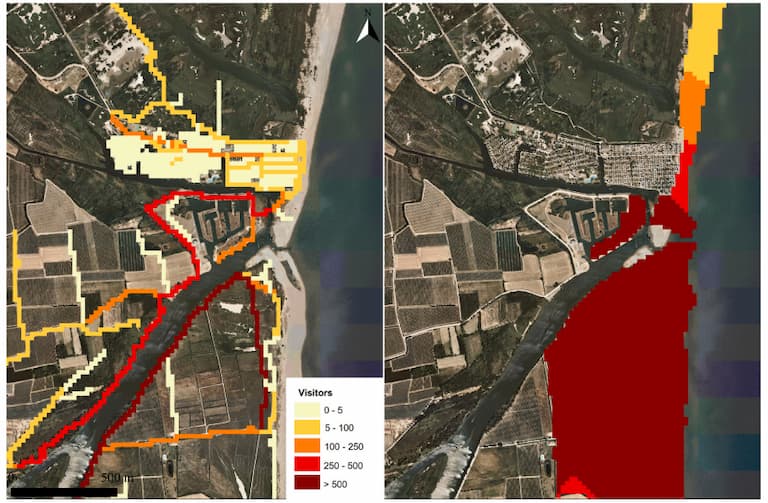
Number of visitors (pedestrians and riders) on an area of Aiguamolls de l’Empordà Natural Park in June 2021, coloured from yellow to dark brown indicating 0 to 3000 visitors respectively.
By assessing the breeding behaviour of Kentish Plovers and studying nests, nestlings and adults in the Cap de Creus Natural Park, experts have found that young birds are “generally less sensitive” to human presence than adults. Their research shows that groups of 250 to 700 people pose a low risk to Kentish plovers, while groups of 1,200 or more people “appear to prevent” these ground-nesting birds from breeding.
Similarly, researchers found even a reduced human presence disturbed Posidonia meadows. By scaling the risk from 0 to 1, results showed human marine activities over 0.1 exposed this endemic Mediterranean plant to a high ecological risk.
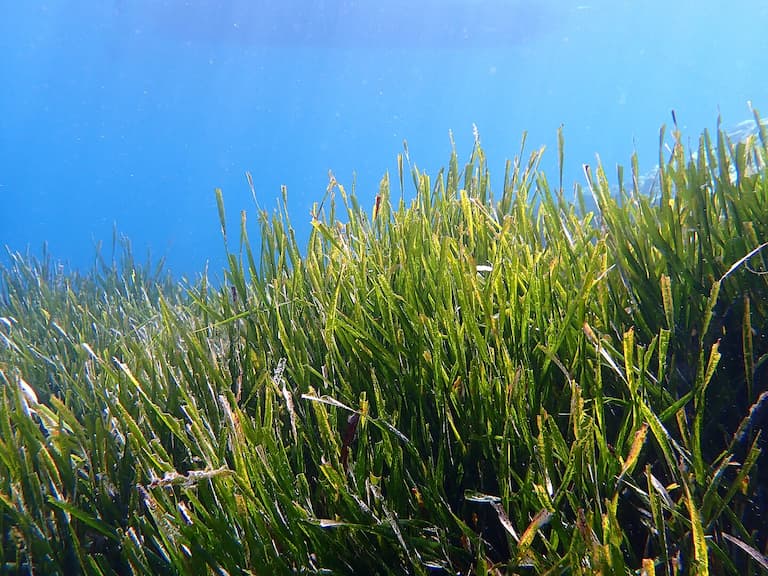
Posidonia Oceanica
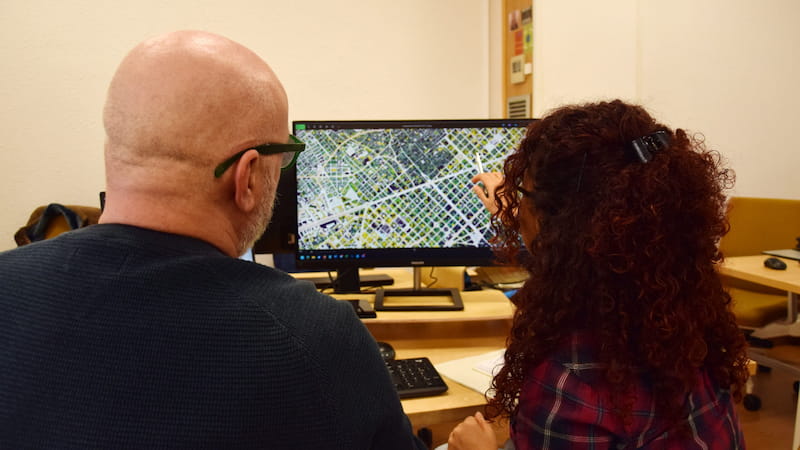
This research, supported by the Catalan Department of Climate Action, Food and Rural Agenda, used CIMNE's PIKSEL platform to gather multi-layered data that will enable “concrete, spatially explicit actions” to minimise the ecological impact of human activities on biodiversity.
The study collected data from 2018 until 2021 and involved the work from eleven researchers at CERCA institutions (Research Centres in Catalonia), and Catalan and Spanish universities.